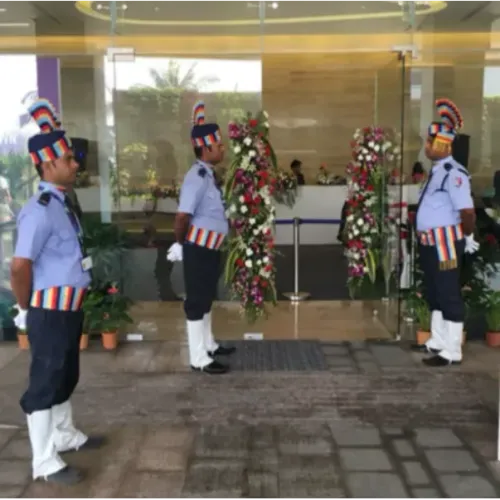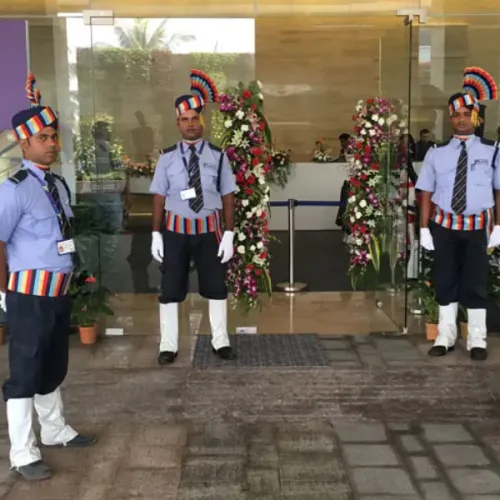
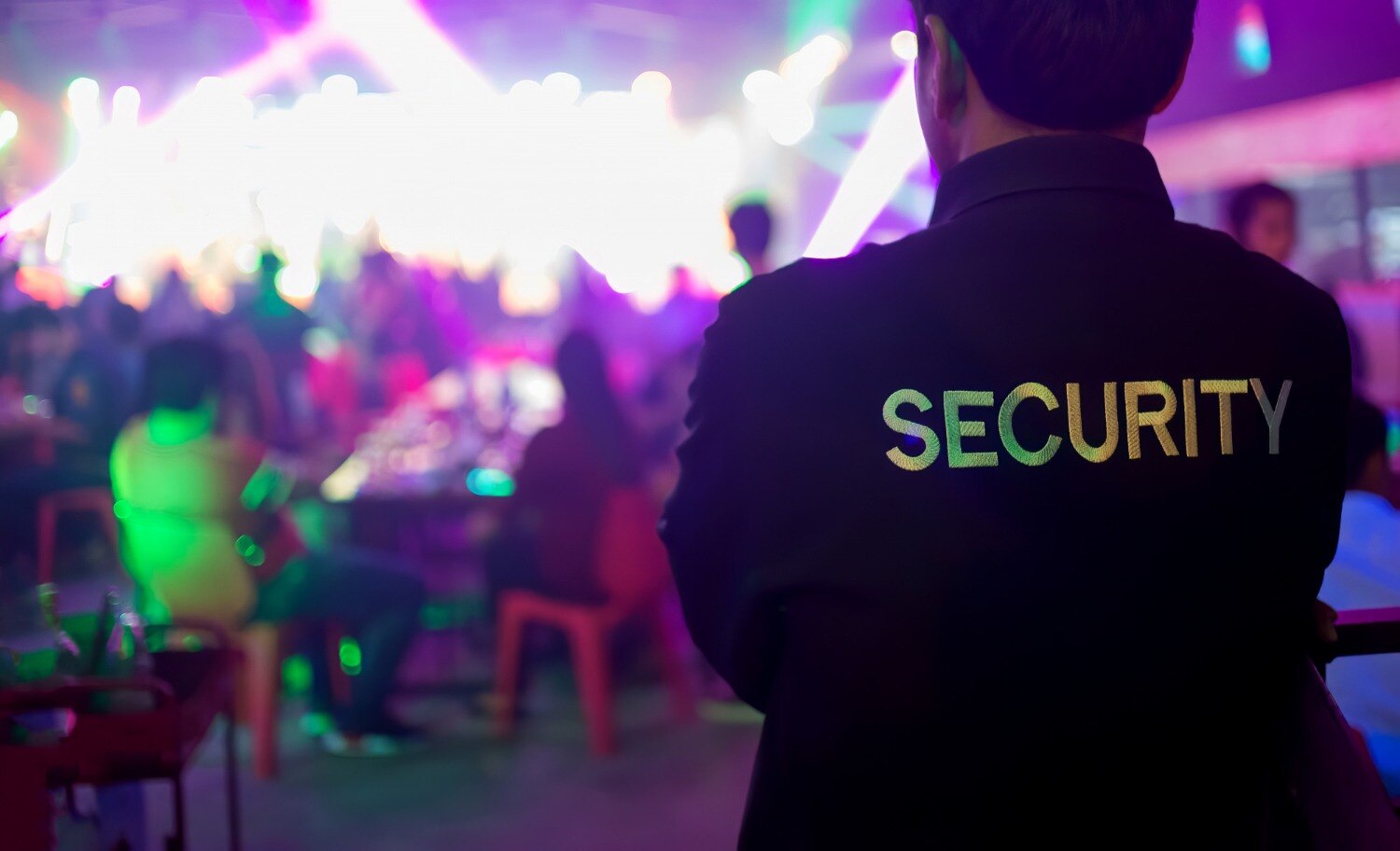
An event can lose control at the entrance, in a crowded queue, backstage or during an emergency faster than receptionists and volunteers can respond. By the end, you will know which risks require trained event personnel, how to plan posts and shifts, and how to compare providers before appointing one.
Key takeaways
- Use trained guards for access control, disputes, evacuation and evidence protection.
- Place guards at gates, registration, restricted areas, parking and exit routes.
- Set guard numbers by entrances, crowd size, venue layout and programme risks.
- Ask for a Form 20B licence copy, duty plan, supervisor details and insurance evidence.
Why Reception Staff and Volunteers Cannot Carry Event Security
A receptionist can check a name; a volunteer can point guests towards a queue. Neither is equipped to stop gate-crashing, manage a dispute, protect evidence after theft, or remove a disruptive attendee without risking the event and their own safety.
Event security requires defined authority, training and rapid escalation. The written scope must state who may deny entry, who controls each zone, who contacts venue management, police, fire services or medical responders, and how an incident is recorded.
A security agency also provides supervision, relief cover and communications instead of leaving one in-house employee responsible for several emergencies.
Use the right role for the risk:
- Uniformed security guards check invitations, credentials, vehicles and bags; protect backstage routes; monitor queues; find unauthorised entrants; and support controlled exits.
- Bouncers manage disruptive behaviour and crowd pressure, especially near alcohol service. They do not replace access-control or evacuation planning.
- Close-protection bodyguards protect one named person’s movement and immediate safety. They do not run queues, searches, lost-child procedures or venue-wide evacuation.
- Plain-clothes loss-prevention staff watch for theft, harassment and suspicious behaviour without advertising their position.
- Venue security knows the building, fire systems and evacuation routes; the event team must still define command and escalation.
- Police presence handles public-order risks and law enforcement. It is not a substitute for planned event staffing.
Lost children, medical incidents and fire evacuation need immediate reporting and coordination with competent venue or emergency personnel. Guards control access and hazards; they do not replace the venue’s fire-safety or medical arrangements. Security guard companies should provide identity, training and licence records under the Private Security Agencies (Regulation) Act, 2005.
Where Event Security Guards Work Before, During and After the Programme
The deployment starts before guests arrive, with a site inspection that maps entrances, vehicle gates, registration desks, elevators, stairwells, bottlenecks, backstage routes, emergency exits and VIP approaches. Event security services in Mumbai should record these findings in a post plan, not rely on a guard count based only on venue size.
1. Check the guest list, invitation format and staff roster before opening the gates. Issue credentials showing both the holder’s identity and permitted zones: delegate, staff, production, restricted stores, VIP or executive routes. A name-only badge leaves event security guards in Mumbai unable to make a clear access decision.
2. Control vehicle entry separately from pedestrian entry. Match drivers and vehicle passes, inspect delivery movements, and keep unauthorised vehicles away from guest drop-off points.
3. Screen bags at the designated entrance and provide a private search room when the venue, organiser or local rules require one. Assign female search staff for women’s screening; never force a search in an exposed queue.
4. Protect backstage, production routes and equipment stores while guards manage queues and crowd movement in public areas. A bodyguard protects one person; event guards control access, theft, disputes and evacuation routes.
5. Assign a response lead for medical, fire and behavioural incidents. Guards can raise the alarm, isolate hazards, open routes and call competent emergency services; they do not replace the venue’s fire, medical or capacity arrangements.
CCTV helps only when an operator watches it, recordings use synchronised time, incidents are marked, and a nearby radio-linked response team acts. After the programme, guards release guests in controlled flows, secure staff and production exits, check cleared zones and record incidents and handover details.
How to Calculate the Team and Build a Working Post Plan
Do not set headcount from venue size alone. A 2,000-person conference with one controlled entrance needs a different deployment from a 500-person launch with alcohol, multiple vehicle gates and an exposed VIP route.
1. Record the operating picture: expected attendance, event type, opening and closing times, arrival peaks, entrances, vehicle gates, registration desks, elevators, stairwells, bottlenecks, backstage routes, VIP exposure and alcohol-service areas. Mark where crowds queue, cross or reverse direction.
2. Turn each risk point into a named post. Assign guards to vehicle screening, registration, each public entrance, lift and stairwell control, backstage access, alcohol areas, VIP approaches and exit flow. Event security guards in Mumbai are effective when each person knows a location, task and reporting line.
3. Add a supervisor for each operating zone, plus a relief guard for meals, toilet breaks and shift overlap. Set start and finish times around peak arrivals and departures, not only the programme schedule. Reserve a mobile response team; one large team can fail when a medical incident, gate dispute and unauthorised entry happen together.
4. Write the communications plan: radio channel for operations, a separate channel for supervisors, call signs, an escalation ladder and a handover log. Keep printed or offline guest and credential lists, backup radios, torches and spare batteries.
5. Plan for Mumbai conditions. Give exposed posts rain protection, identify alternative staff arrival routes during traffic congestion, and pause entry if a queue reaches an unsafe, waterlogged area.
A security agency for corporate events in Mumbai should also specify who controls entry during power or network failure and who contacts venue management, police, fire or medical services.
What the Agency Must Put in Writing Before Deployment
Before deployment, require the security agency to turn its promise into a written operating file. For event security services in Mumbai, that file should identify who controls the team, who may stop entry, and who contacts police, fire or medical services.
1. Written risk assessment: record attendance, event type, alcohol service, VIP exposure, entrances, traffic impact, weather, crowd bottlenecks and foreseeable threats.
2. Marked site plan: show public and delegate areas, staff-only rooms, backstage routes, stores, VIP areas, vehicle gates, screening points, exits, assembly areas, first-aid points and security posts.
3. Duty roster: name each guard, supervisor, shift, post, radio channel, break relief and handover time. Include a response reserve rather than assigning every person to a fixed point.
4. Zone and credential rules: state which badge permits access to each zone. A name-only badge cannot tell a guard whether its holder belongs backstage, in a restricted store or on a VIP route.
5. Escalation matrix and emergency-contact sheet: identify the supervisor, venue manager, organiser, police contact, fire contact, medical provider and authority for stopping entry or pausing the programme.
6. Incident-report format and briefing record: make the log capture time, location, people involved, action taken, witnesses and escalation status. Record who attended the pre-event briefing and what instructions they received.
Keep the boundary explicit: guards control access and report hazards; the venue and organiser retain responsibility for fire systems, medical arrangements, capacity limits and evacuation. Coordinate with venue management and authorities when the location, attendance, loudspeakers, traffic impact or programme requires permissions or specific conditions.
How to Compare Security Guard Companies Before You Appoint One
Compare security guard companies on written evidence, not uniforms or a quoted headcount. A security agency for corporate events in Mumbai should show who is licensed, who is deployed, who supervises the team and what happens when the plan fails.
| Check | Ask for | Clarify before appointment |
|---|---|---|
| PSARA and personnel | Current PSARA licence, guard identity records, antecedent-verification records and training records | Missing documents or records that cover the agency but not individual guards |
| Supervision | Supervisor-to-guard ratio, named supervisor and replacement policy | No relief plan for absence, meals or late arrival |
| Equipment | Female search staff, radios, weather protection and backup communications | Reliance on personal phones during rain, power loss or network failure |
| Commercial terms | Insurance details, overtime rates, invoicing terms and cancellation terms | Verbal charges, unclear liability or cancellation penalties |
| Control and reporting | One event point of contact, escalation ladder and post-event report format | No named decision-maker or incident record |
Ask how the provider will handle waterlogged approaches, unsafe queues, offline credential lists and transport delays. Confirm who can stop entry and who contacts police, fire or medical services; guards do not replace the venue’s fire-safety or medical arrangements.
Use the same questions with Flag Security Services and every shortlisted provider. The strongest proposal links each guard to a post, shift, radio channel and reporting duty, which lets you compare Event Security Services in Mumbai on operational readiness rather than promises.
Related product
 | Event Security Services in Mumbai Event Security Services in Mumbai Flag Security Services Mumbai offers reliable and professional Event Security Services in Mumbai, ensuring complete safety for chief guests,... View product → |
Frequently asked questions
Why are reception staff and volunteers not enough for event security?
They can check names or direct queues, but trained security guards handle gate-crashing, disputes, disruptive attendees, evidence protection and safety risks.
Where do event security guards work before, during and after a programme?
Before the event, guards inspect entrances, restricted areas, emergency exits and parking. During the programme, they manage access, queues, incidents and protected zones. Afterwards, they control exits, collect incident details and secure the venue during teardown.
How do you calculate the event security team size?
Count public entrances, service gates, restricted zones, parking areas, crowd size, programme risks and shift requirements. Turn those needs into fixed posts, patrol routes and a named supervisor.
What should an event security agency put in writing before deployment?
Require the scope of work, guard numbers, post locations, shift times, supervisor contact, access rules, escalation procedure, emergency responsibilities, reporting process and agreed fees.
How should you compare security guard companies before appointing one?
Compare licence documents, relevant event experience, guard training, supervision, replacement arrangements, written operating plans, insurance evidence, incident reporting and the clarity of the quotation.
Keywords