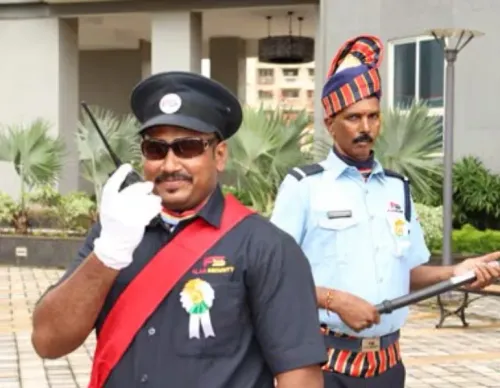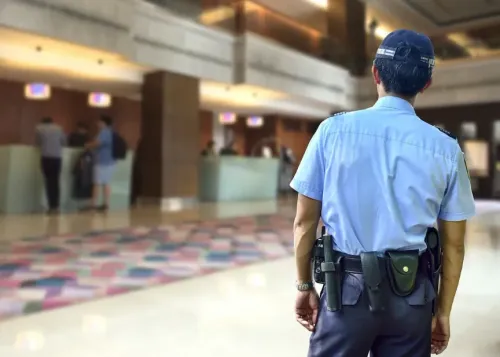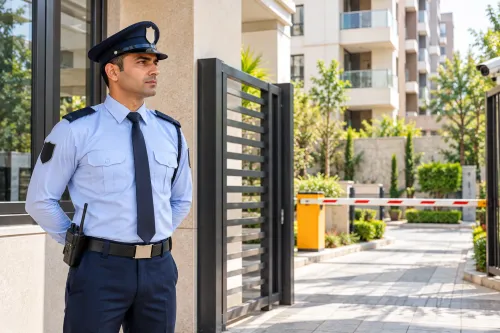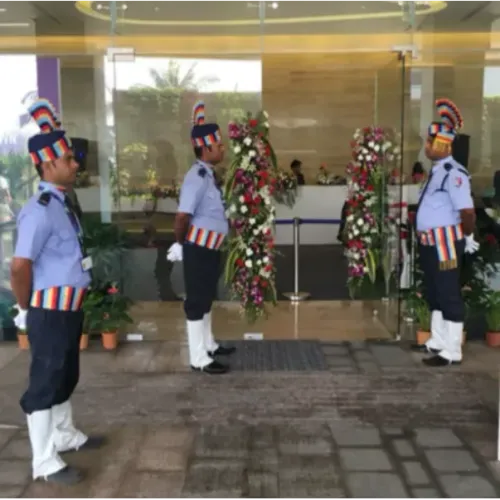
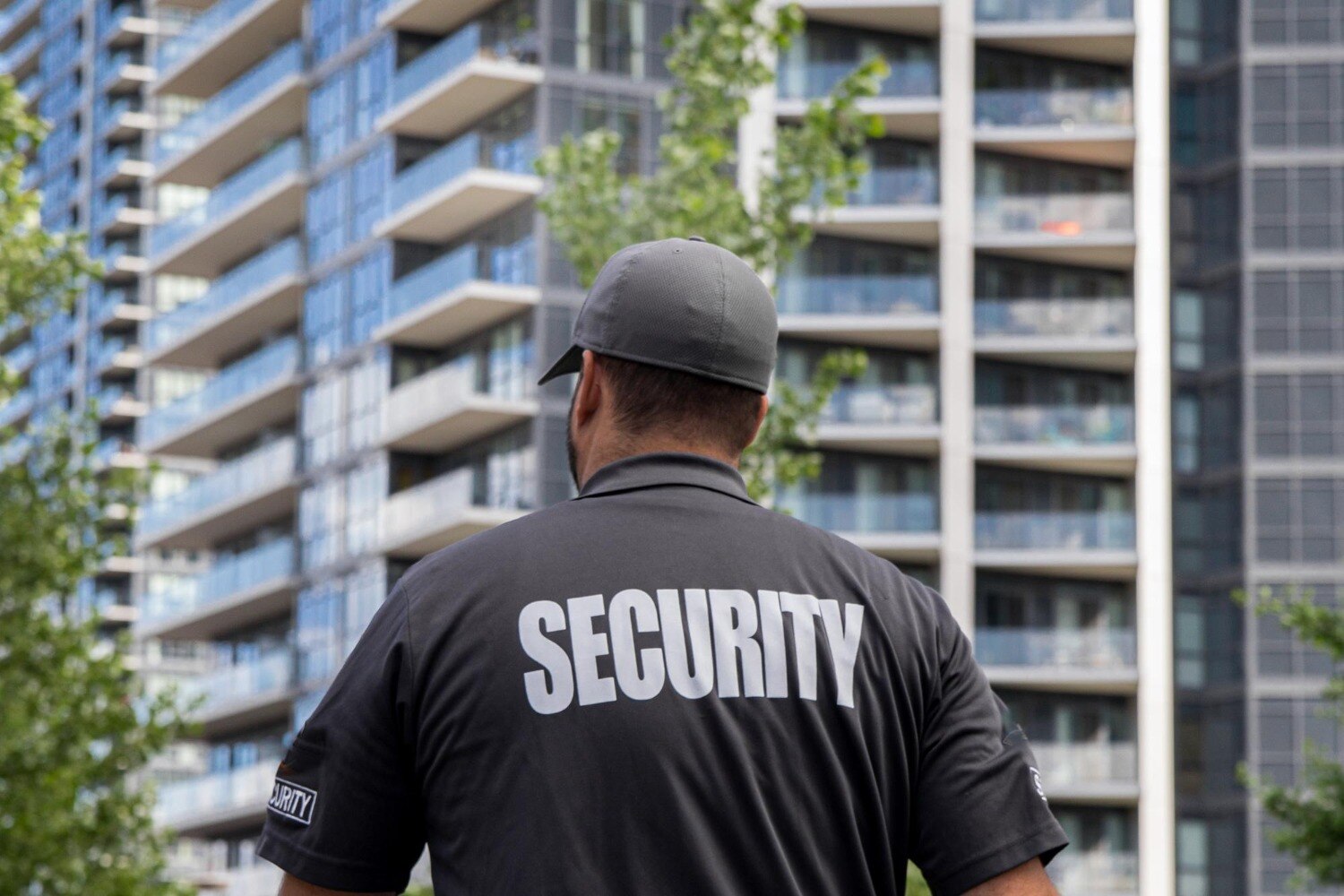
A housing society guard does more than watch the entrance: the post may control visitors, deliveries, contractors, vehicles, keys, alarms, patrols and emergency escalation across the property. By mapping those duties to your society’s layout, staffing risks, records and vendor obligations, you can decide whether you need one gate post, several posts, mobile patrols, CCTV monitoring or a supervisor.
Key takeaways
- Put every gate, delivery and patrol duty in a written post order.
- Record visitors, vehicles, incidents and shift handovers in separate registers.
- Name the supervisor who escalates emergencies and informs society management.
- Match guard numbers and vendor checks to entrances, buildings and risk areas.
What a Society Guard Should Handle During a Normal Mumbai Shift
One guard at a gate is not a complete security operation. Indian security services for housing societies in Mumbai can support the society’s daily controls across entrances, common areas, vehicles, deliveries and emergencies, provided each duty appears in a written post order.
During a normal shift, the guard can:
- Register visitors, domestic workers, drivers, technicians and movers; confirm unlisted visitors with the resident before admission.
- Separate resident, visitor, delivery and service-provider access, issue time-bound passes, and apply the society’s after-hours delivery rule.
- Check delivery details, direct riders to the correct tower or collection point, and prevent unsupervised access beyond authorised areas.
- Record vehicle entries, monitor parking violations, keep fire-engine access clear and report abandoned or suspicious vehicles.
- Patrol lift lobbies, staircases, basements, rooftops, service entrances, perimeter sections and other poorly observed areas.
- Monitor CCTV screens, intrusion alarms, fire-panel alerts and intercom calls, then record faults instead of silently ignoring them.
- Control keys, access cards and contractor passes through a sign-out and return register.
- Report water leaks, power failures, aggressive behaviour, lost children and safety hazards to the designated society contact.
- Raise the alarm, guide residents and keep responder routes open during a fire or medical emergency; never replace statutory fire systems.
Good housing society security in Mumbai also depends on a written handover: outgoing guards record incidents, missing keys, open gates, equipment faults and pending visitors, while trained relievers prevent an unattended post. Guards escalate decisions outside their authority rather than making informal exceptions.
The Post Order for Gates, Visitors, Deliveries and Night Patrols
A post order turns security guard services for apartments into defined actions, not a headcount. Keep it at the gate and require every guard to follow the same sequence, record exceptions, and escalate decisions they are not authorised to make.
1. At shift start, inspect the gate, intercom, torches, radio, visitor register, emergency contacts and CCTV time. Never leave the post unattended; call the reliever before taking a break.
2. Open the gate only after identifying the resident, visitor or vehicle. For an unlisted visitor, call the resident, record name, mobile number, purpose, time in and flat number, then issue a visitor pass after confirmation.
3. Admit delivery riders to the designated handover point. Permit entry beyond it only under a society rule or resident confirmation, and record after-hours deliveries separately.
4. Check contractor identity, company, work order, tools and approved time. Give a dated pass, restrict access to the authorised area, and deny entry when the resident or managing agent cannot verify the job.
5. Check vehicle number plates, driver identity and loading purpose. Keep moving vans, cabs and abandoned vehicles from blocking fire-engine access; record photographs or complaints according to society policy.
6. During night patrols, inspect gates, basements, lift lobbies, terraces, service entrances, water tanks and dark perimeter sections. Log the time and report unlocked doors, leaks, alarms or suspicious activity immediately.
7. At handover, reconcile visitors, contractor passes, keys, vehicles, incidents and pending instructions with the incoming guard. For fire alarms, power failures, water leaks, lost children or aggression, protect people, call the named emergency contact or emergency service, and never replace statutory fire systems with guard action.
Residents must not pressure guards into undocumented exceptions. The supervisor should review registers, patrol times and missed posts each day.
Who Decides, Who Records and Who Escalates an Incident
The managing committee should approve the incident matrix; the managing agent should apply it on every shift. Do not leave a guard to decide whether an event is “serious enough” for escalation. The post order must state who receives the call, who records it, and who has authority to close it.
- Guards observe, prevent access, protect the scene, call the named contact, and make the first entry in the incident register. They do not impersonate police, conduct unauthorised searches, or use force beyond lawful limits.
- The managing agent receives the guard’s call, contacts the committee representative, arranges relief or access control, preserves CCTV footage, and checks that the written report is complete.
- The managing committee decides policy, approves exceptions, informs insurers or lawyers when needed, and reviews recurring failures. It does not instruct guards to conceal incidents.
- Residents confirm their visitors, report hazards, and provide accurate information. They must not demand admission for an unverified person or interfere with an active response.
- Housekeeping staff report leaks, smoke, damaged doors, blocked exits, and unsafe common areas to the guard and managing agent. They must not reset alarms or move evidence unless life safety requires it.
- Police handle suspected crime, threats, violence, theft, missing persons, and unlawful restraint. Call 112 for urgent police assistance.
- Fire services and other emergency responders handle fire, rescue, medical, and hazardous incidents. The guard raises the alarm, clears fire-engine access, guides responders, and records times; Indian security services do not replace statutory fire systems.
That division makes housing society security in Mumbai measurable: one person acts, one records, and one escalates.
The Registers and Handover Records That Make Security Measurable
Require a contract for security guard services for apartments to produce these records on every shift, not only after an incident:
| Record | Required fields | Supervisor review |
|---|---|---|
| Shift handover | Date, time, outgoing and incoming names, post status, keys, alarms, open issues, pending visitors | Confirm both signatures and unresolved items |
| Visitor and delivery | Entry and exit times, flat number, name, phone, vehicle or courier details, resident confirmation | Reconcile unclosed entries each shift |
| Incident | Time, location, people involved, facts, action taken, notifications, evidence reference | Check escalation and committee notification |
| Patrol | Route, checkpoint times, defects, locked doors, leaks, lights and fire access | Compare timestamps with the roster |
| Attendance and relief | Named roster, arrival and departure, break cover, absence, replacement and reason | Verify every post stayed covered |
| Keys and access cards | Item number, holder, issue and return time, authorising person | Count items at handover |
A supervisor should inspect logs daily, contact the guard who made any unclear entry, and send a weekly exception report to the managing agent or committee. Review missing signatures, late patrols, unrelieved posts, repeated visitor exceptions and incidents without closure.
Set a written retention schedule: visitor and delivery logs for 90 days, attendance and patrol records for 12 months, and incident, key and access records for three years.
Keep records locked or password-controlled, restrict access to named committee members and supervisors, mask ID numbers, and share them only for a defined safety, police, insurance or legal purpose.
How to Match Guard Posts and Vendor Compliance to the Site
A lower headcount is not cheaper if one gate is left unattended during breaks or a reliever arrives untrained. Compare society security companies in Mumbai against the posts, hours and controls your site actually needs, not the number printed on the quotation.
| Criterion | Ask for in the proposal | Reject or verify |
|---|---|---|
| Post coverage | A site map showing gate, lobby, parking, patrol route, CCTV desk and night posts | “24-hour security” with no post-by-post roster |
| Relief staffing | Named relievers, break coverage, absence replacement time and written handover logs | One guard per post with no relief plan |
| Training | 100 classroom hours and 60 field hours for an ordinary entry-level guard, plus refresher training | A short site induction presented as full qualification |
| Legal compliance | Written allocation for wages, leave, statutory deductions, uniforms, injury reports and records under the Maharashtra framework | An invoice that leaves the legal employer unclear |
| CCTV and records | Camera-monitoring duties, blind-spot checks, uptime reporting, incident logs and data access rules | A guard promised to “watch CCTV” without equipment ownership or response steps |
| Emergency capability | Alarm escalation, fire-engine access, first aid, evacuation support and police contacts | Claims that guards replace fire systems or trained fire-safety staff |
Use this same scorecard when comparing indian security services for housing societies in mumbai. Require separate workflows for residents, visitors, deliveries and contractors, including after-hours delivery rules and time-bound passes.
Before appointing any indian security services provider, ask for a sample roster, post orders, supervisor inspection form and escalation tree. Flag Security Services should be assessed on these documents and measurable coverage, as should every competing agency.
Related product
 | Residential Security Services in Mumbai Residential Security Services in Mumbai Flag Security Services Are you looking for Residential Security Services in Mumbai or Housing Society Security Guards in Mumbai? Flag Security... View product → |
Frequently asked questions
What should a housing society guard handle during a normal Mumbai shift?
A guard can control entrances, verify visitors and deliveries, monitor vehicles, patrol common areas, respond to alarms and report maintenance or safety issues.
What should a society post order include?
Write instructions for gate access, visitor verification, delivery handling, vehicle entry, key control, night patrol routes, emergency calls and shift handover.
Who decides and escalates a security incident?
The post order should name the guard’s immediate supervisor, the society representative who receives reports and the emergency contacts for police, fire or medical help.
Which records make society security measurable?
Use visitor, vehicle, delivery, incident, patrol, key and shift-handover registers, then review entries for missing details, repeated events and unresolved actions.
Keywords